



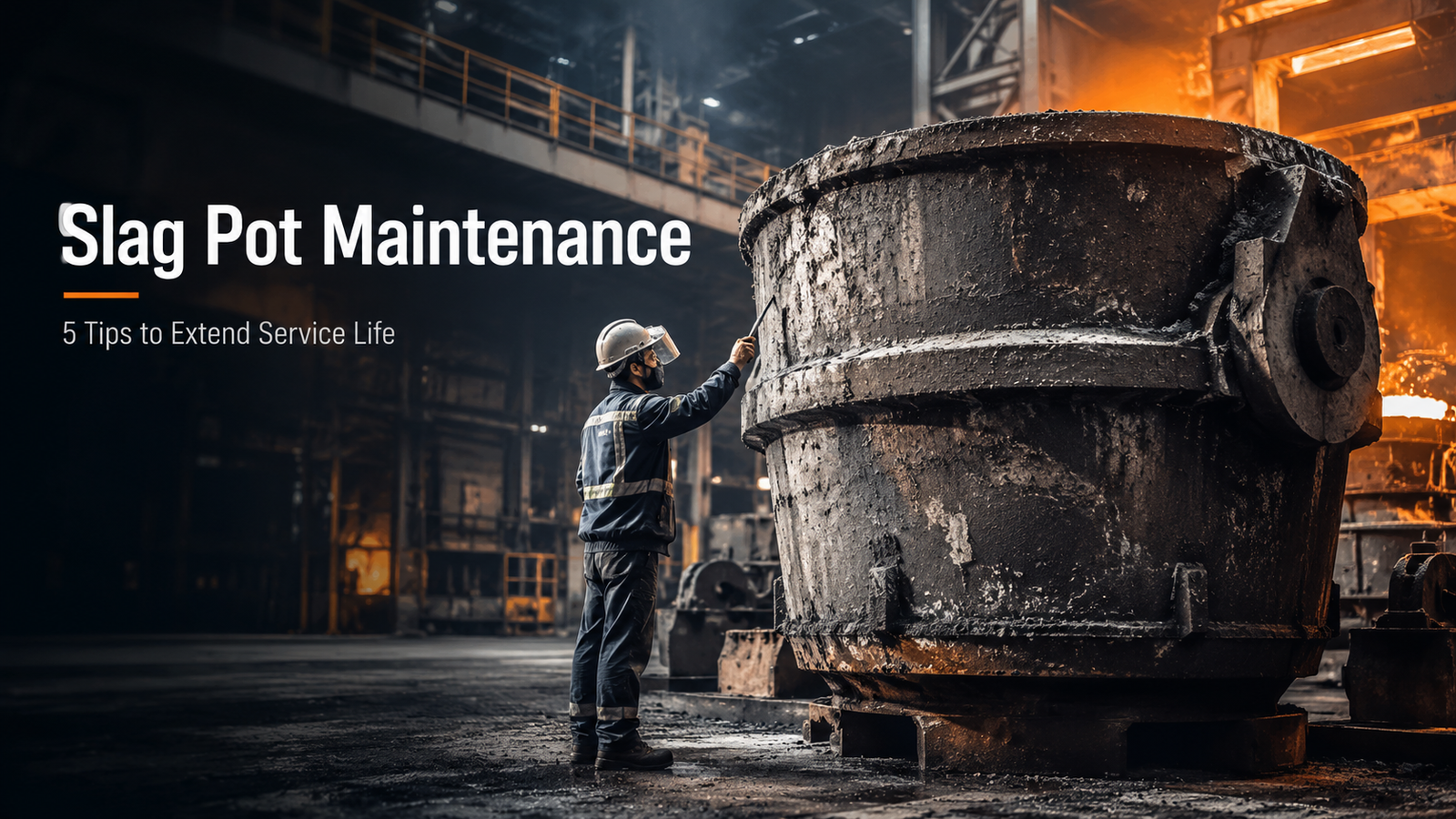
For modern steel mills and metallurgical facilities, maximizing equipment lifespan is the ultimate key to controlling the total cost of ownership (TCO). Among the most heavily stressed components in harsh foundry environments, slag pots endure extreme thermal shock and mechanical wear daily. Implementing a rigorous slag pot maintenance strategy is no longer optional—it is a financial necessity. By adopting the right operational practices, you can dramatically mitigate heat fatigue and crack propagation. In this guide, we share 5 proven tips to optimize your maintenance routine and successfully extend your slag pot service life to 6,000 cycles.
MAINTENANCE & METALLURGY
A STRATEGIC GUIDE FOR STEEL MILLS TO
OPTIMIZE TCO AND REDUCE COSTLY DOWNTIME
Read Article
Hanhai Engineering Team
May 22, 2026 | 7 MIN READ
CONTENTS
1. Why Slag Pot Maintenance Dictates Steel Mill Efficiency
In high-production metallurgical plants, heavy equipment longevity directly influences profitability. Slag pots are continuously subjected to cyclic thermal loading, moving from ambient temperatures to over 1,500°C within minutes. Without systematic slag pot maintenance, this massive thermal gradient causes micro-structural deformation, leading to premature cracking, distortion, and catastrophic failure.
When a slag pot fails early, the financial impact extends far beyond the cost of replacement casting; it triggers unplanned downtime, disrupts the furnace tapping schedule, and poses severe safety hazards on the foundry floor. Proactive maintenance practices prevent these operational bottlenecks by catching metallurgical fatigue before it structuralizes into non-repairable damage.
2. 5 Essential Tips to Extend Slag Pot Service Life to 6,000 Cycles
Achieving an exceptional operational lifespan of 6,000 heating cycles requires moving away from reactive patching and adopting a standardized preventative routine. Here are 5 engineered practices to integrate into your plant workflows.
2.1 Optimize Preheating Protocols to Minimize Thermal Shock
The most violent phase of a slag pot's cycle is the initial contact with molten slag. Introducing liquid slag into a cold pot creates a severe thermal spike, generating extreme tensile stress on the inner walls. Thorough slag pot maintenance always begins before the pour: preheating the pot to 200°C–300°C narrows the temperature gap, effectively flattening the thermal shock curve and protecting the crystalline structure of the steel.
2.2 Implement Controlled Cooling and Avoid Quenching
After tipping and emptying the solidified slag, the empty pot needs to cool down. In fast-paced production environments, operators are often tempted to accelerate this process by spraying water onto the hot metal. Forced water quenching creates sharp localized cooling gradients, locked-in residual stresses, and instant micro-cracks. A proper slag pot maintenance protocol enforces air-cooling in a designated, dry zone to allow the casting to contract uniformly.
2.3 Utilize Advanced Non-Destructive Testing (NDT) for Early Crack Detection
Surface scales and residual slag crusts often mask internal structural fatigue. Regular inspection using non-destructive testing—such as Magnetic Particle Testing (MT) or Ultrasonic Testing (UT)—is the cornerstone of preventative slag pot maintenance. Inspecting critical high-stress zones (like the trunnions and the bottom radius) every 100 to 200 cycles allows engineers to detect microscopic surface fractures and address them before they compromise the structural integrity of the container.
2.4 Master Professional Repair Welding Techniques
Minor cracking is inevitable over hundreds of cycles, but how those cracks are repaired determines whether the pot reaches 6,000 cycles or fails at 2,000. For effective slag pot maintenance, weld repairs must follow strict metallurgical procedures: completely gouge out the crack, preheat the repair zone to prevent localized hardening, use high-quality welding consumables matched to the base metal, and perform post-weld stress relief where necessary to prevent the weld joint from pulling apart.
2.5 Ensure Proper Slag Coating and Release Agent Application
Metal-to-metal bonding between the liquid slag and the pot wall causes severe localized overheating and erosion. Applying a sacrificial lining or spraying a lime/graphite slurry release agent creates a protective barrier. This layer prevents the slag from sticking, ensuring clean dumping behavior. By facilitating an easy release, you minimize the mechanical hammering and rough handling often required to dislodge stuck slag, saving the pot from external mechanical abuse.
3. Choosing the Right Foundry Partner for Durable Heavy Castings
While elite maintenance extends a component's operational life, the ceiling of that lifespan is predetermined by the quality of the original casting. No amount of on-site slag pot maintenance can compensate for sub-surface casting defects, severe porosity, or poor chemical composition established during manufacturing.
Partnering with an experienced heavy casting manufacturer ensures that your equipment is engineered to withstand long-term thermal abuse from day one. Premium foundries focus on pure raw materials, precise ladle refining, and optimized wall-thickness designs to distribute thermal stresses more evenly during operations.
3.1 Advanced Material Selection and Stress Relief Annealing
Top-tier manufacturers utilize high-quality cast steels (such as GS-16Mn5 or ASTM A27 equivalents) specifically tailored for high-temperature resilience. Crucially, completed castings undergo full stress-relief annealing cycles in heat-treatment furnaces. This industrial baking process eliminates internal casting stresses left over from solidification, delivering a perfectly stabilized material structure to your mill that is highly receptive to subsequent slag pot maintenance routines.
4. Conclusion: Maximize Your Slag Pot TCO Today
Consistently hitting 6,000 operational cycles is a combined triumph of superior initial manufacturing and disciplined, technical upkeep. By enforcing preheating protocols, preventing rapid water quenching, utilizing standard NDT tracking, and ensuring clean slag release, steel mills can significantly defer capital expenditure and maintain peak operational safety.
Ready to upgrade your foundry’s reliability? Explore our custom heavy casting solutions at hanhaicasting.com to discover engineered slag pots built to outlast the competition.


 English
 Русский
 العربية
 Español
 Français
 简体中文
简体中文