



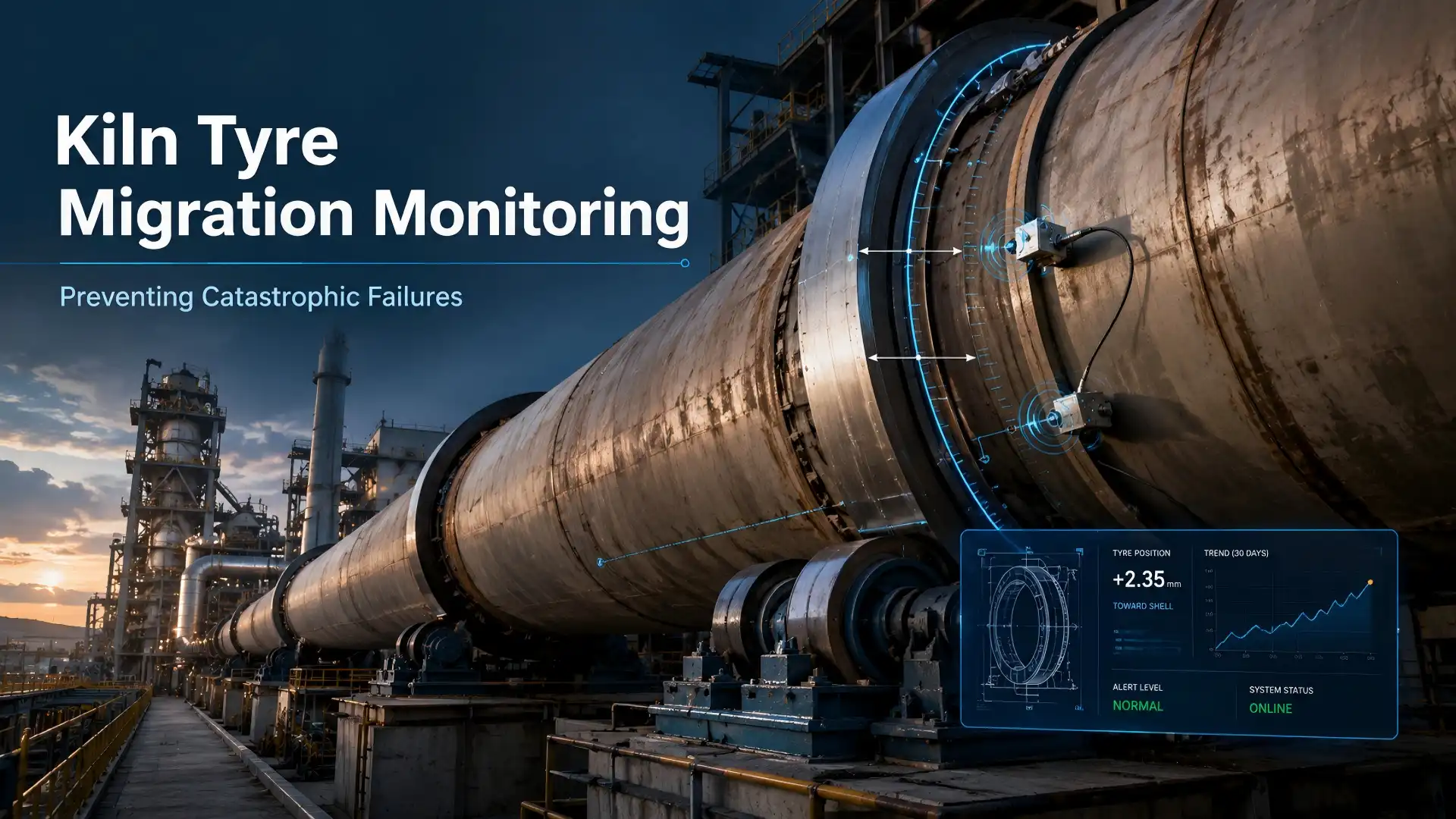
In the heavy processing industry, ensuring the mechanical integrity of a rotary kiln is paramount to avoiding production disasters. At the heart of this structural alignment is kiln tyre migration—a critical metric that measures the relative movement between the kiln shell and its riding ring. If left unchecked, abnormal migration can trigger severe shell deformation, refractory lining damage, and even sudden structural collapses. In this comprehensive guide, we will explore why proactive maintenance monitoring of kiln tyre migration is the single most effective defense against catastrophic rotary kiln failures, helping your plant optimize heavy casting lifespans and eliminate unexpected downtime.
Hanhai Engineering Team
May 23, 2026 | 7 MIN READ
CONTENTS
1. What is Kiln Tyre Migration and Why Does It Matter?
In rotary kiln operations, mechanical components are subjected to extreme thermal expansion and immense structural loads. To accommodate these forces, the heavy steel riding ring (or tyre) is deliberately designed to fit loosely around the kiln shell. This intentional clearance results in a relative movement between the two components during rotation, a phenomenon commercially known as kiln tyre migration.
1.1 The Mechanics Between the Kiln Shell and Riding Ring
Because the rotary kiln shell expands significantly as it reaches operational temperatures, a rigid, tight-fit tyre would cause the shell to constrict or crack. Instead, the tyre rests on filler bars welded to the shell. As the kiln rotates, the inner circumference of the tyre is slightly larger than the outer circumference of the filler bar circle. Consequently, the tyre rotates at a slightly slower pace than the shell.
This difference in rotational distance per turn is the precise definition of kiln tyre migration. Measuring this "slip" or migration rate is the most reliable way for engineers to calculate the internal clearance between the shell and the tyre during live operations.
2. The Hidden Dangers of Ignoring Kiln Tyre Migration
Monitoring this movement is not just a routine check; it is a critical safety practice. If kiln tyre migration falls outside the recommended manufacturer tolerances, it acts as an early warning sign for severe mechanical distress across the entire production line.
2.1 Refractory Damage and Accelerated Wear on Heavy Castings
When the migration rate drops too low, it indicates that the expanding kiln shell is choking against the riding ring. This excessive constriction creates extreme stress, leading to shell deformation or "constriction bottlenecks." Conversely, if kiln tyre migration becomes too high, it means the clearance is excessive. This causes the kiln shell to ovalize (lose its perfectly round shape) during every rotation. This continuous flexing causes the brittle internal refractory bricks to crush against each other and fall out, exposing the raw steel shell to catastrophic thermal damage. Furthermore, abnormal migration accelerates misalignment and abrasive wear on adjacent heavy castings, including the girth gear and support rollers.
2.2 The Financial Blow: Costly Unplanned Plant Downtime
The ultimate consequence of unmonitored kiln tyre migration is sudden mechanical failure. Refractory failure forces immediate plant shutdowns for emergency re-bricking. In worst-case scenarios, excessive shell ovality can lead to structural cracks or a warped kiln axis. For cement plants, paper mills, and mining facilities, a single day of unplanned kiln downtime can result in hundreds of thousands of dollars in lost production revenue, alongside millions in structural heavy casting replacement costs.
3. Effective Methods for Kiln Tyre Migration Monitoring
To stay ahead of unexpected failure, modern processing plants must establish a rigorous, data-driven framework for tracking riding ring behavior.
3.1 From Traditional Visual Checks to Real-Time Digital Tracking
Historically, maintenance crews monitored kiln tyre migration using simple visual check marks. Technicians would draw a reference line across the side of the filler bars and the tyre, then manually measure the distance the lines drifted apart after a set number of revolutions. While cost-effective, this manual method poses safety risks and only provides a snapshot in time.
Today, advanced facilities utilize automated, non-contact digital tracking systems. These systems use electronic sensors or laser scanners mounted near the pier to continuously measure kiln tyre migration and shell temperature profiles in real time. If the migration rate spikes or drops abruptly, the system triggers an immediate alert in the control room, allowing operators to adjust process parameters before physical damage occurs.
4. Proactive Maintenance Strategies to Prevent Rotary Kiln Failures
Once a reliable tracking system is active, maintenance managers must understand how to act on the data gathered from daily kiln tyre migration reports.
4.1 Clearance Adjustments and Lubrication Best Practices
If your monitoring reveals that kiln tyre migration is too high, the internal clearance must be reduced. This is typically achieved by installing precisely machined shims or replacing worn filler bars underneath the riding ring.
Additionally, reducing high-friction wear between the inner tyre surface and filler bars is vital. Regular, controlled application of high-temperature solid lubricants (such as graphite-based bars or specialized fluid sprays) ensures smooth migration, preventing the tyre from sticking or jerking violently against the kiln shell.
4.2 Sourcing High-Quality Replacement Tyres for Long-Term Reliability
No amount of maintenance can save a poorly manufactured component. If a riding ring has suffered severe ovality or thermal cracking due to historical monitoring failures, it must be replaced. When sourcing new kiln tyres, procurement managers must partner with top-tier industrial foundries capable of producing flawless, heavy cast steel structures. Utilizing premium materials like high-grade carbon steel or alloy steel, combined with rigorous Non-Destructive Testing (NDT), ensures that your replacement tyre can handle thermal expansion while maintaining predictable kiln tyre migration parameters for decades.
5. Conclusion: Protecting Your Kiln Investment with Smart Data
Managing a rotary kiln requires balancing extreme heat, massive weight, and continuous motion. Tracking kiln tyre migration gives your maintenance team the exact data needed to maintain that balance.
By transitioning from reactive repairs to proactive digital monitoring, industrial plants can drastically extend the service life of their heavy castings, protect their refractory linings, and completely eliminate catastrophic structural failures.


 English
 Русский
 العربية
 Español
 Français
 简体中文
简体中文