



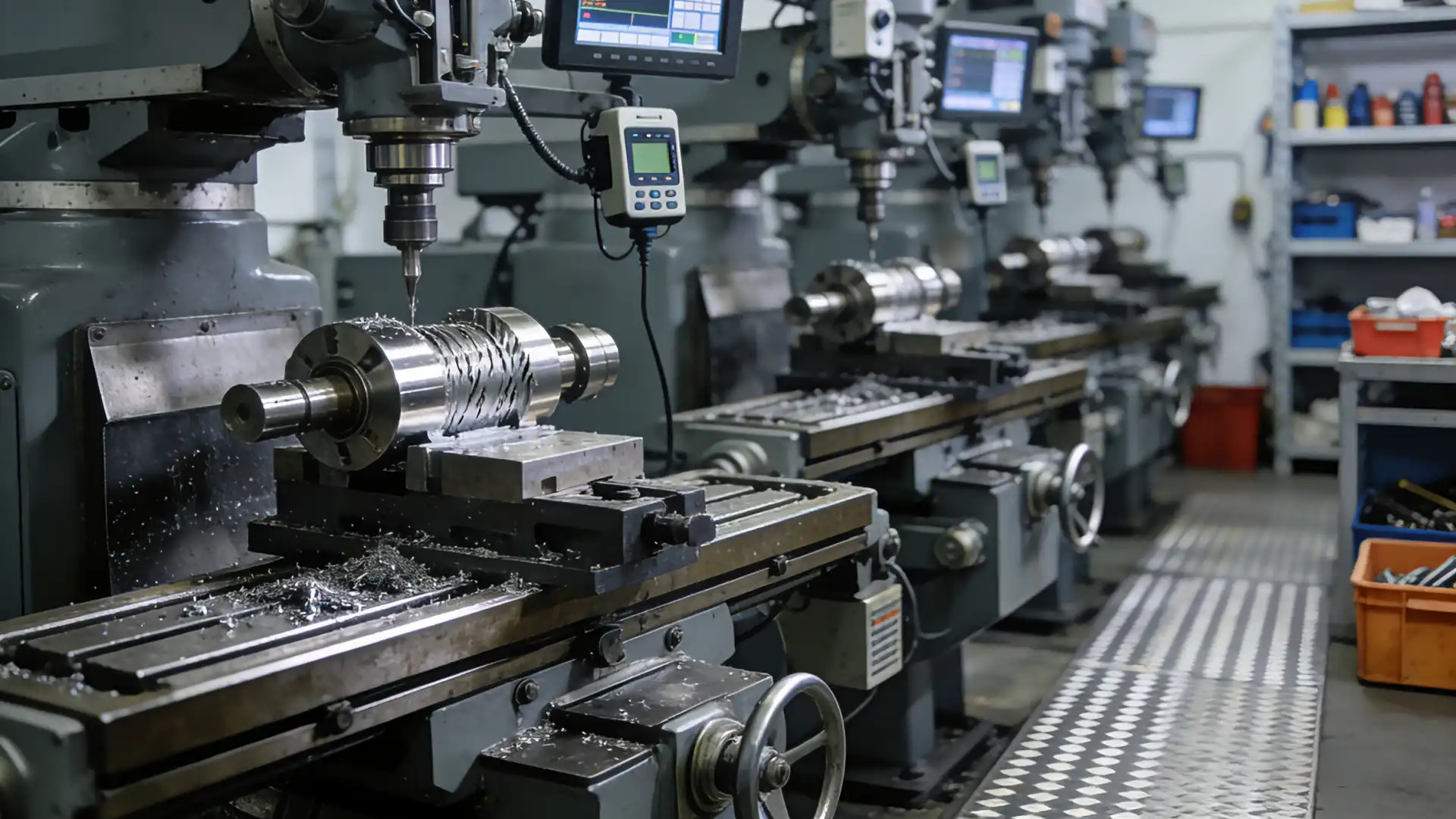
In the world of precision machining, particularly with high-value heavy steel castings, a single setup error can result in devastating material waste and project delays. Relying on traditional trial-and-error is no longer an option for modern manufacturers. Today, Digital Twin Technology is revolutionizing the shop floor. By creating a flawless virtual replica of the machining environment, engineers can simulate, analyze, and perfect every fixture and toolpath before the physical machine even starts. This guide explores how embracing this advanced simulation prevents costly mistakes, eliminates guesswork, and ensures perfect execution from the very first cut.
How Digital Twin Technology Eliminates Setup Errors in Heavy CNC Machining
Hanhai Engineering Team
Mar 30, 2026 · 7 min read
Contents
- 1. What is Digital Twin Technology in Precision Machining?
- 2. The Hidden Costs of Setup Errors in Heavy CNC Machining
- 3. How Digital Twin Technology Eliminates Setup Guesswork
- 4. The Business Value for B2B Sourcing and Engineering Teams
- 5. Partnering with a Forward-Thinking Precision Machining Expert
1. What is Digital Twin Technology in Precision Machining?
To understand its impact, we must first define what this concept means on the manufacturing floor. In precision machining, Digital Twin Technology is the seamless integration of the physical and virtual worlds. It involves creating a highly accurate, data-driven virtual model of the entire machining process—including the CNC machine, the cutting tools, the holding fixtures, and the raw casting itself.
Beyond Traditional 3D CAD: The Dynamic Virtual Replica
While standard 3D CAD models represent the static geometry of a part, a digital twin goes much further. It is a dynamic virtual replica that understands physical properties, machine kinematics, and real-time operational limits. When utilizing Digital Twin Technology, programmers can run the exact G-code in a simulated environment that mirrors the exact physical conditions of the shop floor, revealing how the tools and materials will interact under active machining forces.
2. The Hidden Costs of Setup Errors in Heavy CNC Machining
In standard manufacturing, a setup error might mean scrapping a small piece of aluminum. However, in the realm of heavy CNC machining—which involves large, complex steel castings—the stakes are exponentially higher.
Devastating Material Waste and Scrap Costs
Heavy castings require significant upfront investment in engineering, pattern making, and foundry pouring. If a machinist makes a miscalculation during the clamping or zero-point setup phase, it can lead to gouging or incorrect dimensions. Scrapping a multi-ton casting due to a setup error doesn't just waste raw material; it wipes out weeks of preliminary foundry work and thousands of dollars in a matter of seconds.
Machine Downtime and Missed Deadlines
Setup errors do not only damage the workpiece. An incorrect tool offset or a poorly planned fixture setup can cause severe machine crashes. Damaging a spindle on a heavy-duty boring mill or gantry CNC means catastrophic machine downtime. For procurement teams relying on strict supply chains, this translates directly into missed deadlines and stalled assembly lines.
3. How Digital Twin Technology Eliminates Setup Guesswork
The true power of Digital Twin Technology lies in its ability to shift the trial-and-error phase from the physical machine to the computer screen. Here is how it actively prevents errors during the critical setup phase:
Virtual Fixture Validation and Collision Detection
Clamping large, irregularly shaped castings is notoriously difficult. With Digital Twin Technology, engineers can design and test workholding fixtures in the virtual space. The software automatically runs collision detection, ensuring that the spindle, tool holders, and machine axes will never crash into the clamps, the rotary table, or the unmachined sections of the casting.
Optimizing Toolpaths Before the First Cut
Before a single chip is cut, the digital twin runs the entire CAM program. It identifies areas where the tool might over-engage the material or where plunge rates are too aggressive. By validating the toolpaths virtually, programmers can refine feeds and speeds, completely eliminating the guesswork that typically plagues complex 5-axis setups.
Stress and Deformation Simulation
Heavy machining often involves removing massive amounts of metal, which can release residual stresses and cause thin walls to deform. Advanced Digital Twin Technology can simulate these cutting forces and predict part distortion. Machinists can then adjust their setup sequence—such as roughing out specific areas first—to compensate for these physical changes, ensuring the final tolerances remain perfectly intact.
4. The Business Value for B2B Sourcing and Engineering Teams
For B2B buyers and OEM engineers, partnering with a manufacturer that utilizes Digital Twin Technology offers tangible commercial advantages. It upgrades the vendor-client relationship from reactive problem-solving to proactive precision.
Guaranteed "First-Time-Right" Production
The ultimate goal of any sourcing manager is predictability. By eliminating setup errors virtually, manufacturers guarantee "first-time-right" production. This means the components you order will meet your strict geometric and dimensional tolerances on the very first run, drastically reducing the risk of quality rejections upon delivery.
Accelerated Lead Times for Complex Components
Traditional physical prove-outs (dry runs) on large CNC machines take hours or even days, tying up expensive equipment. Digital Twin Technology allows these prove-outs to happen offline in the engineering department. This maximizes physical machine utilization, accelerates the production schedule, and ensures complex heavy castings are delivered to your facility faster.
5. Partnering with a Forward-Thinking Precision Machining Expert
The implementation of Digital Twin Technology separates conventional machine shops from advanced manufacturing partners. When dealing with high-value heavy steel castings, you cannot afford the financial and temporal losses associated with setup errors. It requires a manufacturer who heavily invests in upfront simulation and engineering validation.
At HanHai Casting, we integrate advanced simulation into our heavy machining workflows to ensure your largest and most complex projects are executed flawlessly. By bridging the gap between digital planning and physical execution, we protect your investment from the very first cut.


 English
 Русский
 العربية
 Español
 Français
 简体中文
简体中文