



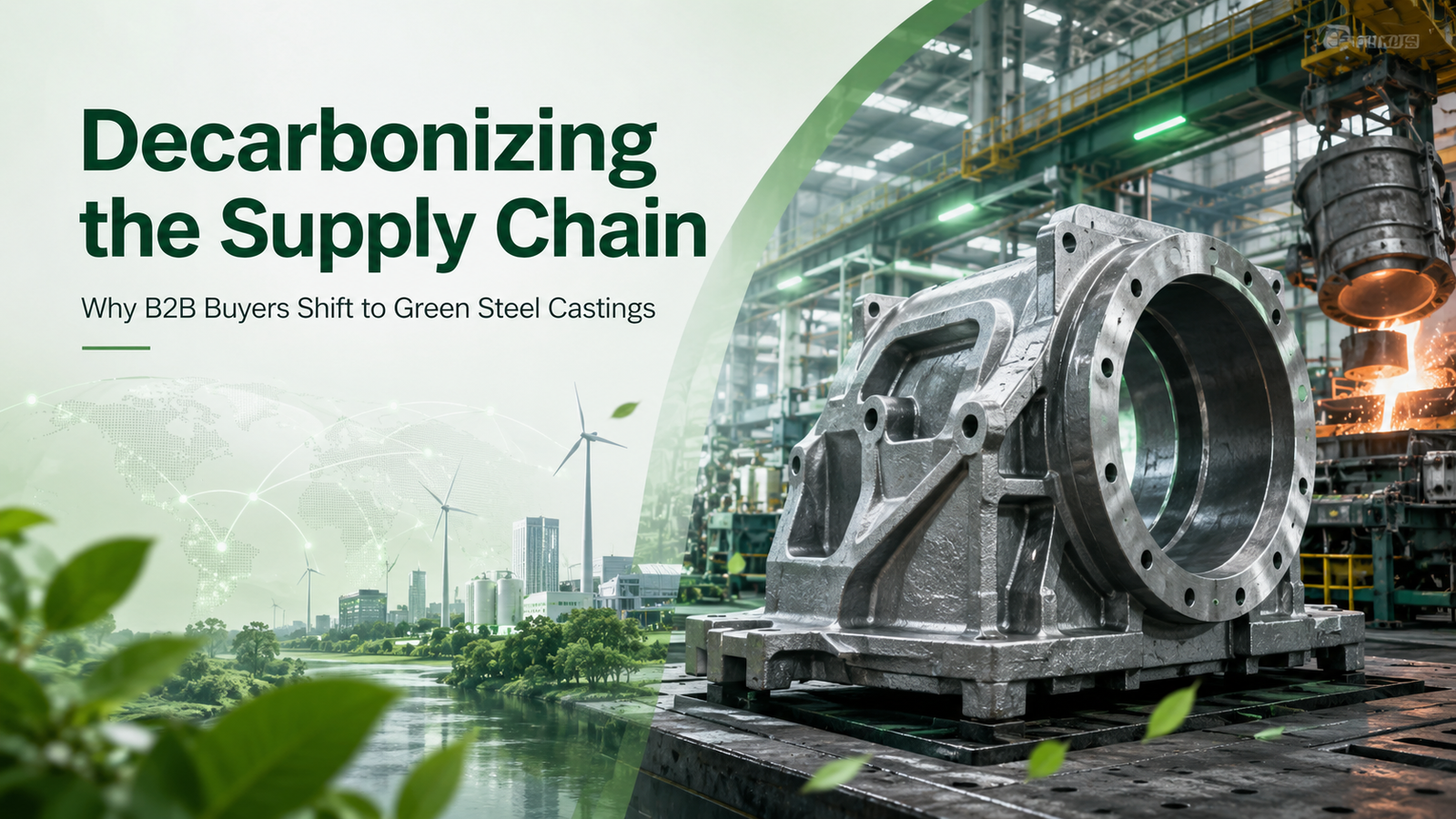
في الوقت الذي تسعى فيه الصناعات العالمية جاهدةً لتحقيق أهداف الانبعاثات الصفرية، تشهد عمليات الشراء الصناعية تحولاً هائلاً. وبالنسبة لمصنعي المعدات الثقيلة، أصبحت انبعاثات النطاق 3 العقبة الرئيسية التالية في مجالي الامتثال والتنافسية. ويؤدي هذا الضغط إلى تغيير جذري في طريقة توريد المكونات المعدنية، وهو ما يفسر سبب تزايد عدد المشترون في قطاع الأعمال بين الشركات (B2B) يتجهون نحو استخدام المسبوكات الفولاذية الصديقة للبيئة لإزالة الكربون من سلاسل التوريد الخاصة بها. وبالإضافة إلى الامتثال للمعايير البيئية، فإن التحول إلى استخدام قطع الصب الثقيلة منخفضة الكربون والموفرة للطاقة يحقق عوائد ملموسة من حيث موثوقية المكونات، وخفض معدلات الخردة، وتحسين تكلفة الملكية على المدى الطويل (TCO).
الاستدامة والمشتريات
توفير قطع الصب الثقيلة منخفضة الكربون لـ
المشتريات الحديثة بين الشركات (B2B).
قراءة المقال
فريق هانهاي الهندسي
2 يوليو 2026 | 6 دقائق للقراءة
المحتويات
1. لماذا تتجه سلاسل التوريد بين الشركات (B2B) نحو استخدام مصبوبات الصلب الصديقة للبيئة
يشهد قطاع التصنيع الصناعي العالمي أكبر تحول له منذ جيل كامل. وبالنسبة لمديري المشتريات وشركات تصنيع المعدات الأصلية (OEM)، لم يعد الحصول على المكونات عالية الأداء يقتصر فقط على تقليل التكاليف الأولية وضمان دقة الأبعاد. فاليوم، تفرض المتطلبات المناخية العالمية وأهداف الشركات المتعلقة بالانبعاثات الصفرية إجراء تحديث هيكلي في لوجستيات الصناعات الثقيلة. وهذا السوق الذي تحركه الاعتبارات البيئية هو بالضبط السبب الذي يدفع فرق المشتريات الصناعية الرائدة إلى التحول بنشاط إلى المسبوكات الفولاذية الصديقة للبيئة لتأمين سلاسل التوريد الخاصة بها.
1.1 الضغوط الناجمة عن انبعاثات النطاق 3 في الصناعة الثقيلة
بالنسبة للشركات الكبرى العاملة في مجالات التعدين وتوليد الطاقة والمعدات المعدنية، تكمن أكبر عقبة أمام الاستدامة في انبعاثات النطاق 3 — أي البصمة الكربونية غير المباشرة الناتجة على طول سلسلة التوريد الأولية. لطالما كان إنتاج المسبوكات الثقيلة عملية كثيفة الكربون. ومن خلال مراجعة ممارسات البائعين وتدقيق انبعاثات الكربون لدى الموردين، يدرك المشترون العالميون أنهم لا يمكنهم تحقيق الامتثال البيئي دون معالجة مسألة المواد الخام التي يحصلون عليها. ويتيح التحول إلى استخدام مسبوكات الصلب الصديقة للبيئة المعتمدة للعلامات التجارية الصناعية خفض بصمتها الكربونية غير المباشرة على الفور، مما يضمن لها البقاء في صدارة اللوائح الدولية الخاصة بالاستيراد وضرائب الكربون الحدودية.
1.2 تجاوز مسألة السعر: التوريد المستدام لتحقيق القيمة على المدى الطويل
في النظام البيئي الحديث للتجارة بين الشركات (B2B)، لم تعد الاستدامة مجرد مصطلح تسويقي شائع؛ بل أصبحت أداة لتخفيف المخاطر. ينظر المشترون الأذكياء إلى دورة الحياة الكاملة للمكون. وتواجه مصانع الصب التي تعتمد على خطوط إنتاج قديمة وعالية الانبعاثات تهديدات مستمرة تتمثل في الإغلاق القسري بموجب اللوائح التنظيمية، والضرائب المرتفعة على الطاقة، وتقلب أسعار المواد الخام. وعلى العكس من ذلك، فإن الحصول على مصبوبات فولاذية صديقة للبيئة يعني إقامة شراكات مع مصانع صب ذات رؤية مستقبلية نجحت في تثبيت تكاليفها التشغيلية من خلال التصنيع المُحسَّن، مما يحمي أعمالك من الاضطرابات المفاجئة في سلسلة التوريد.
2. ما الذي يميز قطع الصب الفولاذية الخضراء عالية الجودة؟
من المفاهيم الخاطئة الشائعة أن التصنيع المستدام يضر بسلامة المكونات الصناعية الثقيلة من الناحية الهيكلية. وفي الواقع، فإن مصبوبات الفولاذ الصديق للبيئة عالية الجودة تفي بجميع المواصفات التقليدية للمواد وفقًا لمعايير ASTM وDIN وISO، بل وتتجاوزها في بعض الأحيان. ولا يؤثر وصف "الصديق للبيئة" على التركيب الكيميائي أو الجودة المعدنية للمنتج النهائي؛ بل إنه يمثل تحسناً جذرياً في العملية الهندسية المستخدمة لتصنيع ذلك المكون.
2.1 عمليات الصهر الموفرة للطاقة والإنتاج المتطور في مجال صناعة السبك
يعتمد إنتاج مصبوبات الصلب الأخضر عالية الجودة على تطبيق تقنيات صهر متطورة. تستخدم المسابك الحديثة والصديقة للبيئة أفران القوس الكهربائي (EAF) عالية الكفاءة التي تعمل بمصادر الطاقة المتجددة مثل الطاقة الشمسية وطاقة الرياح المدمجة في الشبكة. علاوة على ذلك، من خلال دمج تقنية التوأم الرقمي المتطورة وتقنية القولبة الحرارية الرملية المحاكاة، يمكن للمسابك أن تقلل بشكل كبير من هدر المواد وتقضي على أخطاء الإعداد. تضمن هذه الهندسة الدقيقة تحقيق أقصى استفادة من كل عملية صب، مما يؤدي إلى تقليل عدد المكونات المعيبة ومعدل نفايات التصنيع المنخفض بشكل استثنائي.
2.2 تحقيق التوازن بين خفض انبعاثات الكربون ومقاومة التآكل العالية
هل يمكن لمسبوكات صديقة للبيئة أن تصمد أمام الظروف القاسية التي تسود في كسارات التعدين الثقيلة أو التوربينات البخارية ذات درجات الحرارة المرتفعة؟ تجيب شركة «أبسلوت ميتالورجي» بنعم. من خلال استخدام خردة الصلب المعاد تدويرها عالية الجودة جنبًا إلى جنب مع تقنيات السبائك الدقيقة المُحسَّنة، يمكن للمصنعين تحقيق قدرات فائقة في التصلب بالعمل. وهذا يعني أن مصبوبات الصلب الصديقة للبيئة الخاصة بكم توفر نفس الصلابة عند الصدم ومقاومة التآكل العالية المطلوبة لأواني الخبث الثقيلة، وإطارات الأفران، والآلات الصناعية المخصصة، كل ذلك مع تقليل البصمة الكربونية بشكل كبير.
3. العائد الاقتصادي على الاستثمار في المسبوكات الثقيلة المستدامة
غالبًا ما يُنظر إلى الاستثمار في المشتريات المستدامة على أنه عبء مالي، لكن البيانات المالية تروي قصة مختلفة تمامًا. فالتوريد المكونات منخفضة الانبعاثات الكربونية يوفر عائدًا اقتصاديًا قابلًا للقياس على الاستثمار (ROI) يعود بفائدة مباشرة على صافي أرباح الشركات المصنعة للمعدات الأصلية.
3.1 خفض التكلفة الإجمالية للملكية (TCO) من خلال تقليل النفايات
عند شراء مصبوبات فولاذية صديقة للبيئة، فإنك تشتري منتجًا تم تحسينه من خلال هندسة القيمة. تستثمر المسابك الملتزمة بممارسات الصب الصديقة للبيئة استثمارات ضخمة في تقنية الصب «شبه النهائي» (near-net shape) والأتمتة الدقيقة. ونظرًا لأن المصبوبات تُصب بدقة هندسية شبه مثالية، فإن كمية المواد الزائدة التي يتعين إزالتها أثناء المعالجة باستخدام الحاسب الآلي (CNC) تنخفض بشكل كبير. ويعني تقليل وقت المعالجة انخفاض تكاليف العمالة، وتقصير مدة التسليم، وانخفاضًا كبيرًا في التكلفة الإجمالية للملكية (TCO) لكل مكون نهائي.
3.2 كيف يمنع الامتثال للمعايير البيئية حدوث اضطرابات في سلسلة التوريد
مع تشديد اللوائح البيئية على الصعيد العالمي، يتم استبعاد الشركات المصنعة غير الممتثلة بشكل منهجي أو فرض غرامات باهظة عليها. ومن خلال التحقق من أن شريكك في التصنيع يحمل شهادات الامتثال البيئي ISO 14001 المحدثة، فإنك تحمي شركتك من الانهيارات المفاجئة في سلسلة التوريد. ويضمن تأمين تدفق موثوق به من مصبوبات الصلب الصديقة للبيئة عالية الجودة استمرار جداول الإنتاج الخاصة بك دون انقطاع، مما يحافظ على سمعتك في التسليم في الوقت المحدد للمستخدمين النهائيين على مستوى العالم.
4. الخلاصة: اختيار الشريك المناسب في مجال المسابك الصديقة للبيئة
لم يعد الانتقال إلى التصنيع الصناعي الصديق للبيئة مجرد توقعات مستقبلية — بل أصبح حقيقة تجارية واقعة. وبالنسبة للمشترين في قطاع الأعمال بين الشركات (B2B) الذين يسعون إلى تأمين مستقبل سلاسل التوريد الخاصة بهم مع الحفاظ على معايير ميكانيكية صارمة، فإن اعتماد مصبوبات الصلب الصديقة للبيئة يمثل الخطوة الاستراتيجية المثلى.
يكمن مفتاح نجاح عملية الانتقال في اختيار شريك تصنيع متكامل يوازن بين المسؤولية البيئية والمهارات المعدنية المتميزة. ومن خلال الحصول على قطع الصب الفولاذية الثقيلة من مسابك متطورة تعتمد على التكنولوجيا، يمكن لمصنعي المعدات الأصلية تحقيق أهدافهم في خفض انبعاثات الكربون بثقة دون المساس بأي قدر من متانة المكونات أو دقتها أو أدائها.

 English
 Русский
 العربية
 Español
 Français
 简体中文
简体中文