



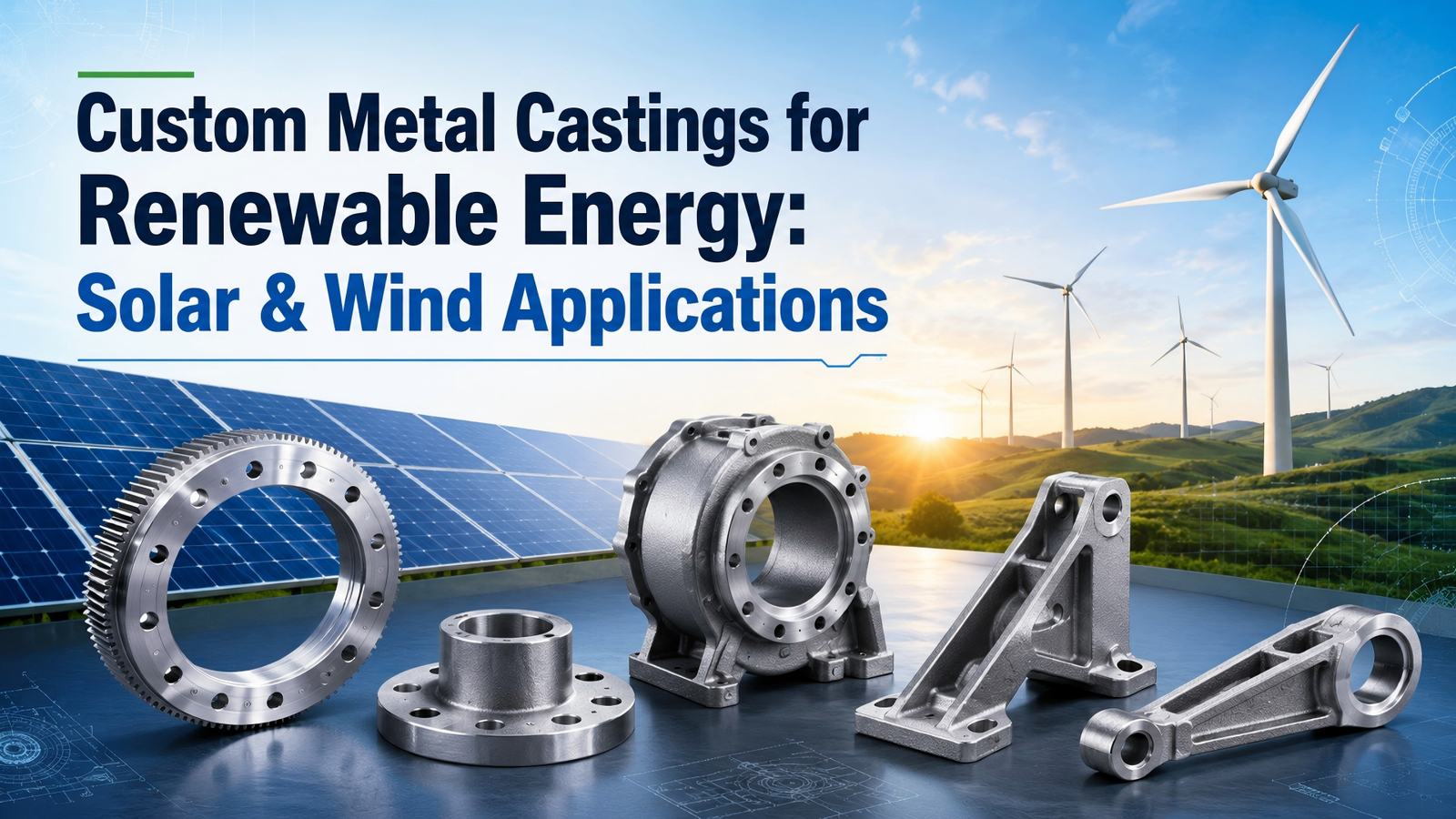
L'expansion rapide des énergies propres exige une fiabilité sans précédent de la part de chaque composant matériel. Pour résister à des environnements extérieurs extrêmes et à une forte fatigue structurelle, les équipementiers se tournent de plus en plus vers des solutions de fabrication spécialisées. Le passage à des pièces moulées métalliques sur mesure pour les énergies renouvelables est devenu une stratégie essentielle pour les leaders du secteur qui cherchent à prolonger la durée de vie de leurs composants. Dans ce guide, nous explorons comment le moulage à usage intensif et l'usinage de précision offrent la durabilité et la rentabilité optimales requises pour les suiveurs solaires et les éoliennes de nouvelle génération.
ÉNERGIES RENOUVELABLES ET TRANSPORT D'ÉLECTRICITÉ
ALIMENTER LES INFRASTRUCTURES ÉOLIENNES ET SOLAIRES DE NOUVELLE GÉNÉRATION
CONÇU POUR DURER
Lire l'article
L'équipe d'ingénierie de Hanhai
22 juin 2026 | 6 MIN DE LECTURE
SOMMAIRE
- 1. Pourquoi les pièces moulées sur mesure destinées au secteur des énergies renouvelables offrent-elles une durabilité supérieure ?
- 2. Principales applications : pièces moulées de précision dans les infrastructures solaires et éoliennes
- 3. Choix des matériaux : des alliages spécialement conçus pour une exposition extrême aux intempéries
- 4. Optimisation de la chaîne d'approvisionnement des équipementiers : fabrication et contrôle qualité
- 5. Conclusion : Renforcer les infrastructures d'énergie verte grâce à des pièces moulées métalliques sur mesure
1. Pourquoi les pièces moulées sur mesure destinées au secteur des énergies renouvelables offrent-elles une durabilité supérieure ?
L'expansion rapide des énergies propres exige une fiabilité sans précédent de la part des infrastructures industrielles. Pour résister à des environnements extérieurs imprévisibles et à des charges structurelles importantes, les équipementiers mondiaux ont besoin de composants offrant une longévité maximale. L'utilisation de pièces moulées sur mesure pour le secteur des énergies renouvelables est progressivement devenue la référence en matière de développement de projets à forte exigence, surpassant les méthodes de fabrication traditionnelles sur tous les plans structurels.
1.1 Les installations solaires et éoliennes modernes exigent une grande résistance à la fatigue
Qu'elles soient exposées aux vents violents du désert ou aux rafales turbulentes du littoral, les centrales solaires et éoliennes fonctionnent sous des contraintes cycliques continues. Dans ces conditions, les assemblages soudés standard sont très sensibles à l'apparition de microfissures et, à terme, à une défaillance structurelle. Les pièces moulées métalliques sur mesure, spécialement conçues pour les énergies renouvelables, éliminent ces points faibles en répartissant uniformément les contraintes mécaniques sur l'ensemble du composant et en améliorant considérablement la résistance à la fatigue des systèmes de fixation et de rotation critiques.
1.2 Remplacement des assemblages soudés en plusieurs pièces par des pièces moulées monolithiques
Pour les responsables des achats et les ingénieurs concepteurs, il est essentiel de réduire le temps d’assemblage et le gaspillage de matériaux. Les pièces moulées monolithiques permettent de transformer des assemblages soudés complexes composés de plusieurs pièces en une seule pièce de forme quasi-finale. Cette évolution permet non seulement de minimiser le coût total de possession (TCO), mais aussi d'éliminer les inspections de soudure et les traitements thermiques post-soudage, très exigeants en main-d'œuvre, généralement requis pour les infrastructures industrielles lourdes.
2. Principales applications : pièces moulées de précision dans les infrastructures solaires et éoliennes
La polyvalence des techniques de coulée spécialisées rend les pièces moulées sur mesure indispensables dans le domaine des énergies renouvelables, tant pour les systèmes de rails photostatiques que pour les structures aérodynamiques massives des éoliennes.
2.1 Composants à haute résistance destinés aux rotors, aux réducteurs et aux nacelles des éoliennes
Les éoliennes à grande échelle nécessitent des pièces moulées de grande taille capables de supporter des masses rotatives considérables. Les composants critiques tels que les moyeux de rotor principal, les bras de couple, les carters de générateur et les supports de stator sont optimisés grâce au moulage de précision au sable. En contrôlant les vitesses de refroidissement et les matrices d'alliage, les fonderies peuvent produire des pièces moulées denses et exemptes de défauts, capables de gérer de manière fiable le couple constant des groupes motopropulseurs éoliens de classe mégawatt.
2.2 Tubes de couple et supports structurels pour suiveurs solaires à grande échelle
Dans les parcs solaires à grande échelle, les systèmes de suivi doivent maintenir les panneaux photovoltaïques parfaitement alignés pendant des décennies. Les paliers de haute précision, les leviers d'entraînement et les charnières structurelles lourdes sont souvent fabriqués à l'aide de techniques de moulage sur mesure. Ces pièces garantissent des tolérances géométriques strictes et un contrôle fluide de la rotation, empêchant ainsi tout grippage mécanique, même en cas de dilatations et de contractions thermiques extrêmes.
3. Choix des matériaux : des alliages spécialement conçus pour une exposition extrême aux intempéries
Le choix d'une métallurgie adaptée constitue une étape fondamentale lors de l'acquisition de pièces moulées sur mesure destinées aux infrastructures d'énergie renouvelable, dont la durée de vie opérationnelle prévue est de 25 ans.
3.1 Fonte ductile et acier au carbone face aux alliages d'aluminium résistants à la corrosion
En fonction des exigences en matière de structure et de poids, différents alliages sont utilisés dans le cadre du projet :
- Fonte ductile (par exemple, GGG40/GGG50) : Très prisé pour les pièces moulées destinées aux éoliennes en raison de son excellente résistance aux chocs et de ses propriétés supérieures d'amortissement des vibrations.
- Acier au carbone : Conçu pour les supports solaires structurels nécessitant une résistance à la traction exceptionnelle afin de résister aux forces de soulèvement dues à des vents à grande vitesse.
- Alliages d'aluminium : Utilisé pour la fabrication de boîtiers de suiveurs solaires légers et de caissons d'onduleurs, où la conductivité thermique et la résistance naturelle à la corrosion sont primordiales.
3.2 Prévention de la dégradation de l'environnement : revêtements et traitements de surface de pointe
Pour renforcer les propriétés intrinsèques des pièces moulées sur mesure, les fonderies de pointe appliquent des finitions de surface spécialisées. Qu'il s'agisse de la galvanisation à chaud pour les aciers au carbone, de l'anodisation dure ou des revêtements en poudre époxy pour les composants en aluminium, ces traitements protègent le métal sous-jacent contre l'humidité atmosphérique, les rayons UV et les particules abrasives en suspension dans l'air.
4. Optimisation de la chaîne d'approvisionnement des équipementiers : fabrication et contrôle qualité
Pour s'approvisionner en composants critiques à l'échelle mondiale, il est nécessaire de s'associer à un fabricant capable de faire le lien, sans rupture, entre la fusion des matières premières en fonderie et l'usinage de précision final.
4.1 Comment Hanhai Casting parvient à respecter des tolérances très strictes pour les composants destinés au secteur des énergies renouvelables
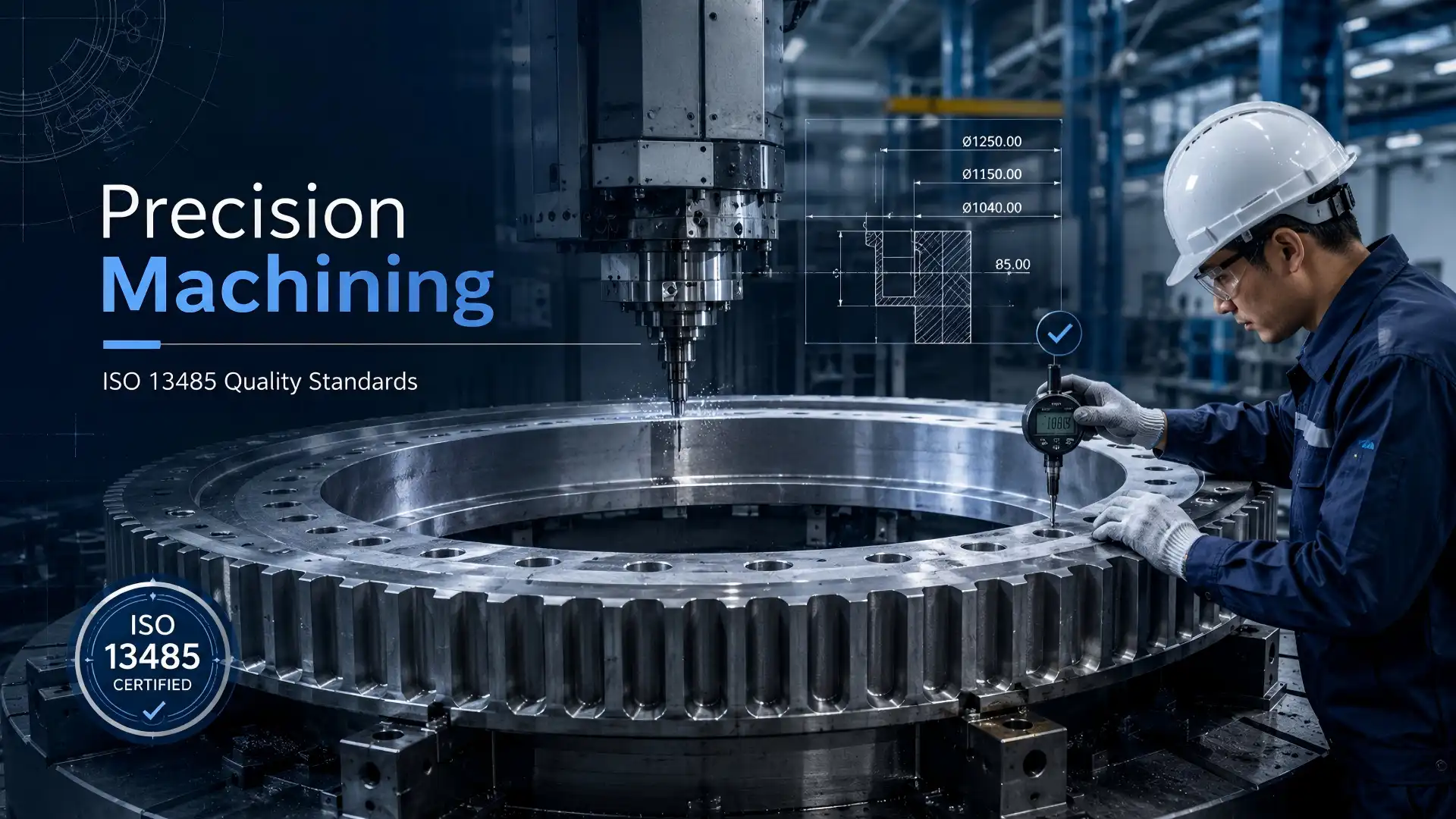
Chez Hanhai Casting (hanhaicasting.com), nous recourons à une fabrication intégrée — alliant le moulage au sable de pointe à l'usinage CNC 5 axes — afin de respecter les tolérances géométriques précises exigées par les équipementiers du secteur des énergies vertes. Grâce à l'utilisation des technologies de jumeau numérique et à un contrôle qualité en temps réel tout au long du processus d'usinage, nous éliminons les erreurs de réglage et réduisons considérablement les délais de livraison pour les pièces d'infrastructure complexes et destinées à un usage intensif.
4.2 Normes rigoureuses en matière de contrôles non destructifs et d'inspection qualité afin de garantir une durée de vie de 25 ans
Pour garantir une fiabilité élevée, une validation rigoureuse est indispensable. Les fonderies de premier plan ont recours à un ensemble complet de normes relatives aux essais non destructifs (END) afin de garantir l’intégrité interne des pièces. Grâce aux contrôles par ultrasons (UT), aux contrôles par particules magnétiques (MPI) et aux contrôles par ressuage (LPT), chaque défaut interne ou microfissure superficielle est détecté et traité avant même que les composants ne quittent l'usine.
5. Conclusion : Renforcer les infrastructures d'énergie verte grâce à des pièces moulées métalliques sur mesure
Alors que les systèmes énergétiques mondiaux poursuivent leur transition historique vers le développement durable, l'infrastructure mécanique des parcs solaires et éoliens ne doit en aucun cas être compromise. Investir dans des pièces moulées métalliques sur mesure de haute qualité destinées aux énergies renouvelables vous garantit une disponibilité maximale de vos systèmes, des coûts de maintenance réduits au minimum et une efficacité opérationnelle optimisée.
S'associer à un spécialiste expérimenté et polyvalent du moulage et de l'usinage tel que Hanhai Casting (hanhaicasting.com) C'est l'étape décisive vers la mise en place d'un réseau d'énergie verte résilient et à l'épreuve du temps.

 English
 Русский
 العربية
 Español
 Français
 简体中文
简体中文