



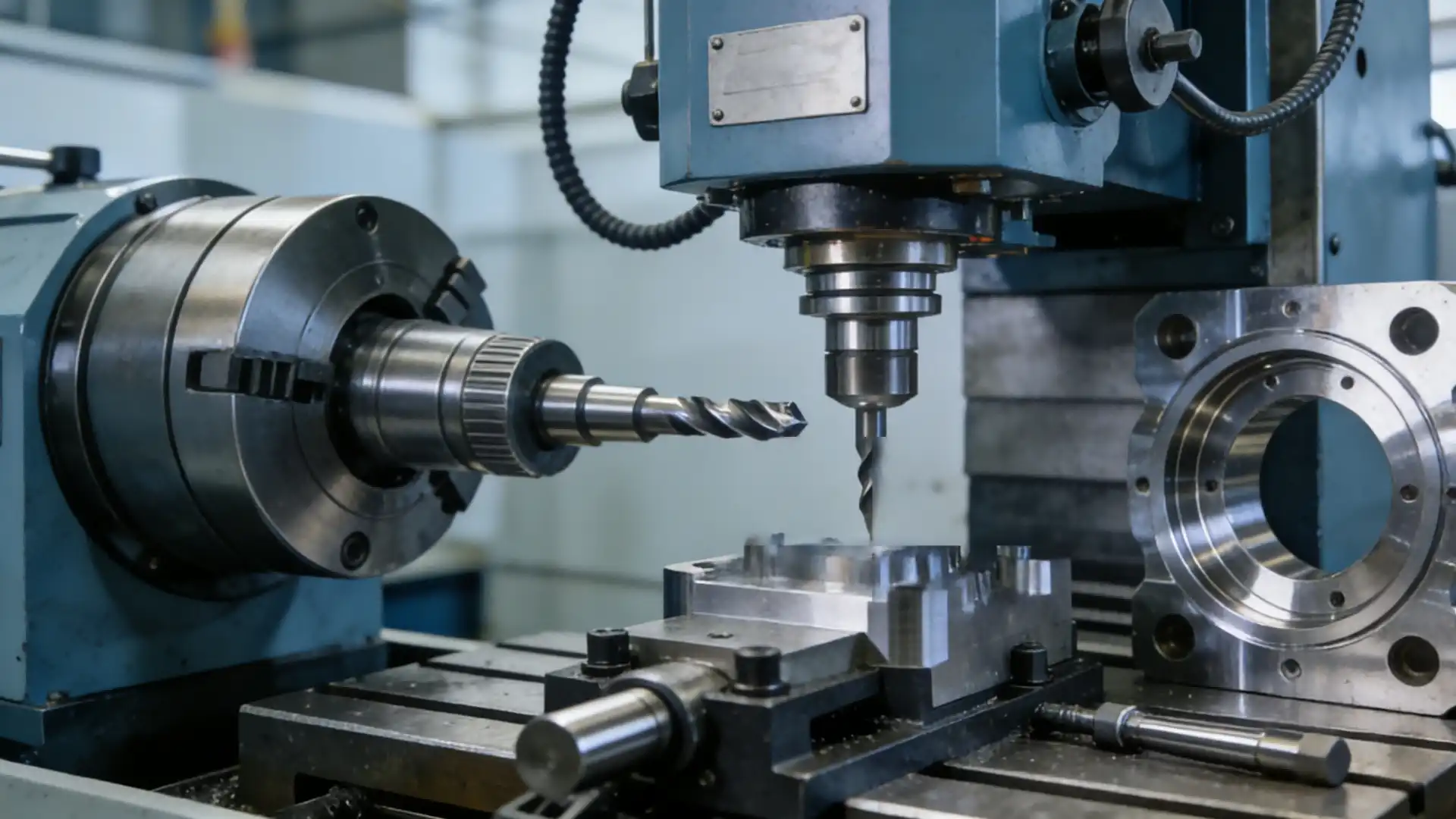
Dans l'environnement de fabrication mondial d'aujourd'hui, de nombreux acheteurs industriels s'appuient sur des partenaires spécialisés pour réaliser l'usinage de précision de grands composants moulés. Cependant, il n'est pas toujours facile de choisir le bon partenaire d'usinage CNC pour les pièces moulées industrielles. Les différences de capacités techniques, de systèmes de contrôle de la qualité, de capacités d'usinage et de normes de communication peuvent avoir un impact significatif sur les performances finales de vos composants.
Trouvez le bon partenaire d'usinage CNC pour les pièces moulées industrielles afin de garantir des tolérances serrées et une livraison dans les délais.
L'équipe d'ingénierie de Hanhai
9 mars 2026 - 7 min read
Contenu
- 1. Pourquoi le choix d'un partenaire spécialisé dans l'usinage CNC des pièces de fonderie industrielle est crucial
-
2. Les 7 facteurs critiques pour évaluer votre partenaire d'usinage
- 2.1 Expérience confirmée dans le domaine des pièces moulées
- 2.2 Équipements de pointe et capacités multiaxes
- 2.3 Expertise en matière de fixation et de conception d'outils sur mesure
- 2.4 Contrôle strict de la qualité et systèmes d'inspection avancés
- 2.5 Compréhension approfondie des propriétés des matériaux de fonderie
- 2.6 Capacité de production et évolutivité
- 2.7 Communication transparente et intégration de la chaîne d'approvisionnement
- 3. Conclusion : Poser des bases solides pour vos projets de casting
- 4. Prêt à donner un coup de fouet à votre prochain projet de moulage et d'usinage ?
1. Pourquoi le choix d'un partenaire spécialisé dans l'usinage CNC des pièces de fonderie industrielle est crucial
L'usinage des pièces moulées brutes est fondamentalement différent de l'usinage des barres, des plaques ou des billettes standard. Les pièces moulées présentent souvent des difficultés inhérentes : surfaces irrégulières, angles de dépouille, surépaisseurs d'usinage incohérentes, contraintes internes et points durs potentiels. Comme les pièces moulées représentent un investissement initial important dans l'outillage et la fonderie, vous ne pouvez pas vous permettre d'erreurs lors de l'étape finale de l'usinage. C'est précisément la raison pour laquelle il est essentiel de trouver un partenaire spécialisé dans l'usinage CNC des pièces de fonderie industrielles. Un partenaire spécialisé sait comment établir des points de référence corrects sur des surfaces irrégulières, concevoir des dispositifs de maintien personnalisés et ajuster les paramètres de coupe pour tenir compte des propriétés métallurgiques uniques des métaux moulés.
2. Les 7 facteurs critiques pour évaluer votre partenaire d'usinage
2.1 Expérience confirmée dans le domaine des pièces moulées
Une expérience générale de la commande numérique ne suffit pas. Vous avez besoin d'un partenaire qui a fait ses preuves dans le traitement des pièces moulées. Les ingénieurs expérimentés savent comment gérer les variations de la fonte, telles que les déplacements du noyau ou les légers écarts dimensionnels par rapport à la fonderie. Ils savent comment "cibler" une pièce moulée pour s'assurer que toutes les caractéristiques usinées sont correctement nettoyées, en répartissant uniformément la surépaisseur d'usinage afin d'éviter de rayer une pièce brute en parfait état.
2.2 Équipements de pointe et capacités multiaxes
Les pièces moulées industrielles sont souvent complexes, lourdes et nécessitent un dimensionnement et un tolérancement géométriques (GD&T) précis sur plusieurs faces. Recherchez un partenaire d'usinage CNC pour les pièces moulées industrielles équipé de centres d'usinage horizontaux (HMC) robustes, de grandes fraiseuses à portique et de capacités à 4 ou 5 axes. Les machines multi-axes permettent d'usiner la pièce en une seule fois, ce qui réduit considérablement le temps de manipulation et élimine les erreurs d'empilage qui se produisent lorsque les pièces sont repositionnées manuellement.
2.3 Expertise en matière de fixation et de conception d'outils sur mesure
Contrairement aux barres carrées, les pièces moulées présentent rarement des surfaces planes et parallèles qui se laissent facilement saisir dans un étau standard. Votre partenaire d'usinage doit disposer de solides capacités d'ingénierie et d'outillage en interne pour concevoir et fabriquer des gabarits et des fixations sur mesure. Une fixation correcte permet de maintenir la forme irrégulière en toute sécurité, sans induire de contraintes susceptibles de faire sortir la pièce de sa tolérance une fois qu'elle est sortie de la machine.
2.4 Contrôle strict de la qualité et systèmes d'inspection avancés
La qualité ne peut pas être inspectée dans une pièce, mais elle doit être vérifiée. Un fournisseur de premier plan disposera d'un laboratoire d'inspection climatisé équipé de machines à mesurer tridimensionnelles (MMT) de haute précision capables de mesurer des profils 3D complexes. En outre, vérifiez leur système de gestion de la qualité : des certifications telles que ISO 9001 ou IATF 16949 démontrent un engagement en faveur de processus de qualité normalisés et reproductibles.
2.5 Compréhension approfondie des propriétés des matériaux de fonderie
Les différents matériaux moulés se comportent différemment sous l'effet d'un outil de coupe. La nature abrasive de la fonte, les caractéristiques gommeuses de certains aluminiums coulés ou la peau dure de l'acier moulé nécessitent des stratégies d'usinage spécifiques. Votre partenaire doit posséder une connaissance approfondie de la métallurgie pour sélectionner les bonnes nuances de carbure, les géométries d'outil, les pressions de liquide de refroidissement et les vitesses/les avances afin d'optimiser les temps de cycle tout en conservant d'excellents états de surface.
2.6 Capacité de production et évolutivité
Votre projet peut commencer par quelques prototypes, mais que se passe-t-il lorsque vous devez passer à des milliers d'unités ? Évaluez l'espace disponible chez le fournisseur, la redondance des machines et les horaires de travail. Un partenaire fiable doit être en mesure de vous accompagner tout au long de la phase initiale d'inspection du premier article (FAI) et d'assurer une transition transparente vers une production de masse en grande quantité sans provoquer de goulots d'étranglement dans la chaîne d'approvisionnement.
2.7 Communication transparente et intégration de la chaîne d'approvisionnement
Les meilleures relations avec les fabricants sont fondées sur la transparence. Évaluez leur réactivité au cours de la phase d'établissement du devis : c'est souvent un bon indicateur de la manière dont ils géreront le projet par la suite. En outre, un partenaire qui offre des services à valeur ajoutée, tels que la coordination des traitements thermiques après usinage, le placage de surface, la peinture ou l'assemblage mineur, peut simplifier considérablement votre chaîne d'approvisionnement et réduire vos délais d'exécution.
3. Conclusion : Poser des bases solides pour vos projets de casting
La transformation d'un moulage brut en un composant mécanique de haute précision exige des connaissances spécialisées, une technologie appropriée et un engagement en faveur de la qualité. En évaluant rigoureusement les fournisseurs sur la base de leur expérience spécifique en matière de moulage, d'équipement, de compétences en matière de fixation et de contrôle de la qualité, vous limitez les risques et protégez vos résultats. En fin de compte, choisir le bon partenaire d'usinage CNC pour les pièces moulées industrielles ne consiste pas seulement à externaliser un processus ; il s'agit d'assurer un avantage concurrentiel à votre chaîne d'approvisionnement de fabrication.
4. Prêt à donner un coup de fouet à votre prochain projet de moulage et d'usinage ?
Ne laissez pas vos pièces moulées de grande valeur au hasard. Contactez notre équipe d'ingénieurs dès aujourd'hui pour discuter de vos plans, demander un devis détaillé ou en savoir plus sur la façon dont nos capacités d'usinage CNC avancées peuvent donner vie à vos projets de moulage les plus complexes avec une précision absolue.


 English
 Русский
 العربية
 Español
 Français
 简体中文
简体中文