



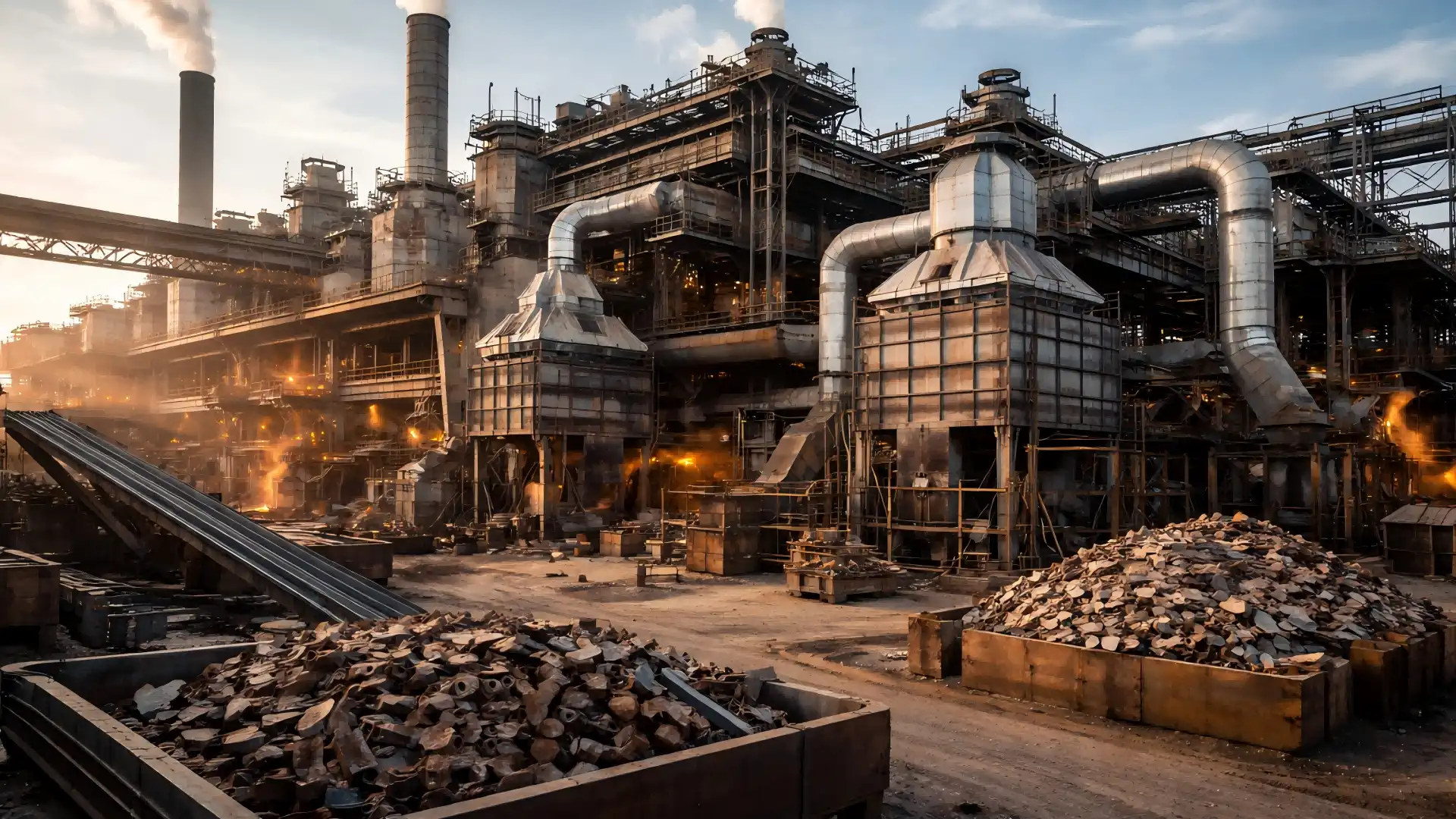
La liste de contrôle des pratiques de fonderie verte est plus qu'un slogan sur le développement durable : c'est un guide pratique, axé sur les coûts. Dans cet article, vous trouverez 12 améliorations réalisables qui réduisent la consommation d'énergie, les rebuts et les retouches, ainsi que les émissions, afin que votre fonderie puisse réduire son impact sur l'environnement tout en protégeant ses marges.
Un guide pratique, axé sur le retour sur investissement, pour les fonderies d'acier modernes
Cet article présente une liste de contrôle pratique des pratiques de fonderie écologique visant à réduire la consommation d'énergie, à diminuer les déchets et à réduire les coûts d'exploitation grâce à des améliorations mesurables et axées sur les processus.
L'équipe d'ingénierie de Hanhai
Publié le 28 février 2026
Table des matières
Dans les opérations de coulée d'acier lourd, l'énergie n'est pas seulement une dépense utilitaire - elle est directement liée à l'efficacité de la fusion, au taux de rebut et à la fréquence des retouches. La mise en œuvre d'une liste de contrôle structurée des pratiques de fonderie verte est essentielle pour optimiser ces facteurs.
1. Pourquoi chaque fonderie a besoin d'une liste de contrôle des pratiques écologiques en fonderie
1.1 Le coût réel de l'énergie et de la ferraille
Dans les opérations de coulée d'acier lourd, l'énergie n'est pas seulement une dépense utilitaire : elle est directement liée à l'efficacité de la fusion, au taux de rebut et à la fréquence des retouches. Une petite augmentation du taux de rebut ne se traduit pas seulement par un gaspillage de matières premières, mais aussi par un doublement de la consommation d'énergie due à la refonte.
Une liste de contrôle structurée des pratiques de fonderie verte permet d'identifier les pertes d'énergie cachées :
- Marges de surchauffe excessives
- Longue durée de maintien au four
- Des taux de rebut élevés
- Propriétés instables du sable entraînant des défauts
Lorsque la ferraille augmente de seulement 2-3%, le coût total de production peut augmenter considérablement en raison de la puissance de refonte, de la main-d'œuvre, de la correction de l'alliage et des retards de livraison.
1.2 La durabilité comme avantage concurrentiel
Le respect de l'environnement n'est plus une simple pression réglementaire. Les acheteurs évaluent de plus en plus les fournisseurs sur la base de :
- Systèmes de contrôle des émissions
- Efficacité énergétique
- Stratégie de réduction des déchets
- Stabilité du processus
Une liste de contrôle bien documentée des pratiques des fonderies vertes montre que le développement durable est intégré dans le contrôle opérationnel et n'est pas traité comme un langage marketing. Pour les acheteurs internationaux, cela réduit les risques liés à la chaîne d'approvisionnement et renforce la coopération à long terme.
2. Les 12 pratiques écologiques de fonderie qui réduisent la consommation d'énergie, les déchets et les coûts d'exploitation
2.1 Optimisation de l'énergie pour la fusion et le maintien en température
La consommation d'énergie par tonne est l'indicateur principal de l'efficacité des fonderies. Les actions clés sont les suivantes :
- Optimiser le mélange des charges pour augmenter le rendement métallique
- Contrôle de la surchauffe dans des fenêtres de processus stables
- Minimiser le temps de maintien à vide du four
- Installer des variateurs de vitesse sur les moteurs à forte charge
- Inspecter les systèmes d'air comprimé pour détecter les fuites
Ces mesures permettent de réduire directement le nombre de kWh par tonne et de diminuer les coûts d'exploitation sans investissement majeur.
2.2 Réduction des déchets grâce à la stabilité du processus
La réduction des déchets est souvent le moyen le plus rapide de réduire les coûts et l'empreinte carbone. Améliorations essentielles :
- Améliorer la conception des portes et des colonnes montantes afin de réduire le rétrécissement
- Normaliser la plage de température de coulée
- Utiliser l'analyse Pareto des défauts pour se concentrer sur les problèmes récurrents les plus importants.
- Stabiliser l'humidité du sable, l'AFS et le dosage du liant
Un rendement plus élevé au premier passage signifie moins de refonte, moins de perte d'alliage et une meilleure fiabilité de livraison.
2.3 Amélioration du sable et du contrôle des émissions
Les systèmes de sable et le contrôle des émissions influencent à la fois le coût et le risque de non-conformité.
- Améliorer la récupération du sable pour réduire la consommation de sable neuf
- Optimiser les niveaux de liant pour réduire les émissions de COV
- Améliorer l'efficacité du captage des fumées sans surdimensionner les systèmes de filtration
Ces mesures permettent de réduire simultanément les déchets de décharge, le coût des consommables et l'exposition à l'environnement. Ensemble, ces 12 actions forment une liste de contrôle pratique des pratiques de fonderie verte qui concilie la responsabilité environnementale et la discipline opérationnelle.
3. Transformer la liste de contrôle des pratiques de fonderie écologique en un retour sur investissement mesurable
3.1 Suivre les bons indicateurs de performance clés
Pour transformer le développement durable en une valeur commerciale mesurable, il faut se concentrer sur les points suivants :
- kWh par tonne de fonte
- Taux de rebut (%)
- Rendement au premier passage
- Consommation de sable par tonne
- Temps d'arrêt de la maintenance
Une liste de contrôle des pratiques de fonderie verte correctement mise en œuvre améliore ces indicateurs de manière systématique plutôt qu'aléatoire.
3.2 Logique de calcul du délai de récupération simple
Le retour sur investissement peut être calculé à partir de trois catégories de coûts primaires :
- Économies d'énergie par tonne × production annuelle
- Réduction de la ferraille × matériau + coût de refonte
- Réduction des temps d'arrêt et des frais de maintenance
Dans de nombreux cas, les mesures d'optimisation des processus sont rentabilisées en 6 à 12 mois, en particulier dans les environnements de fusion par induction. Lorsque les mesures environnementales sont liées à des paramètres financiers, le développement durable devient une stratégie de protection des bénéfices plutôt qu'un fardeau financier.
4. Mise en œuvre de la liste de contrôle des pratiques de la fonderie verte en 90 jours
4.1 Gains rapides en 30 jours
Commencez par des améliorations peu coûteuses :
- Contrôle du temps de maintien du four
- Inspection des fuites d'air comprimé
- Calibrage de l'humidité du sable
- Normalisation des données sur les défauts
Ces changements nécessitent peu de capitaux mais offrent une visibilité opérationnelle immédiate.
4.2 Plan de mise à niveau structuré
Ensuite, élaborez une feuille de route de 60 à 90 jours :
- Amélioration de l'efficacité des moteurs
- Amélioration de la récupération du sable
- Équilibrage du captage des émissions
- Programmation de la maintenance préventive
La clé réside dans une exécution structurée. Une liste de contrôle documentée des pratiques de la fonderie verte garantit la responsabilité, des étapes mesurables et la stabilité des performances à long terme.
Résumé
La responsabilité environnementale et la réduction des coûts vont de pair dans l'industrie de la fonderie. En adoptant une liste de contrôle structurée des pratiques de fonderie verte, les fonderies peuvent réduire considérablement la consommation d'énergie, diminuer les taux de rebut et construire une chaîne d'approvisionnement résiliente et durable qui attire les acheteurs mondiaux.


 English
 Русский
 العربية
 Español
 Français
 简体中文
简体中文