



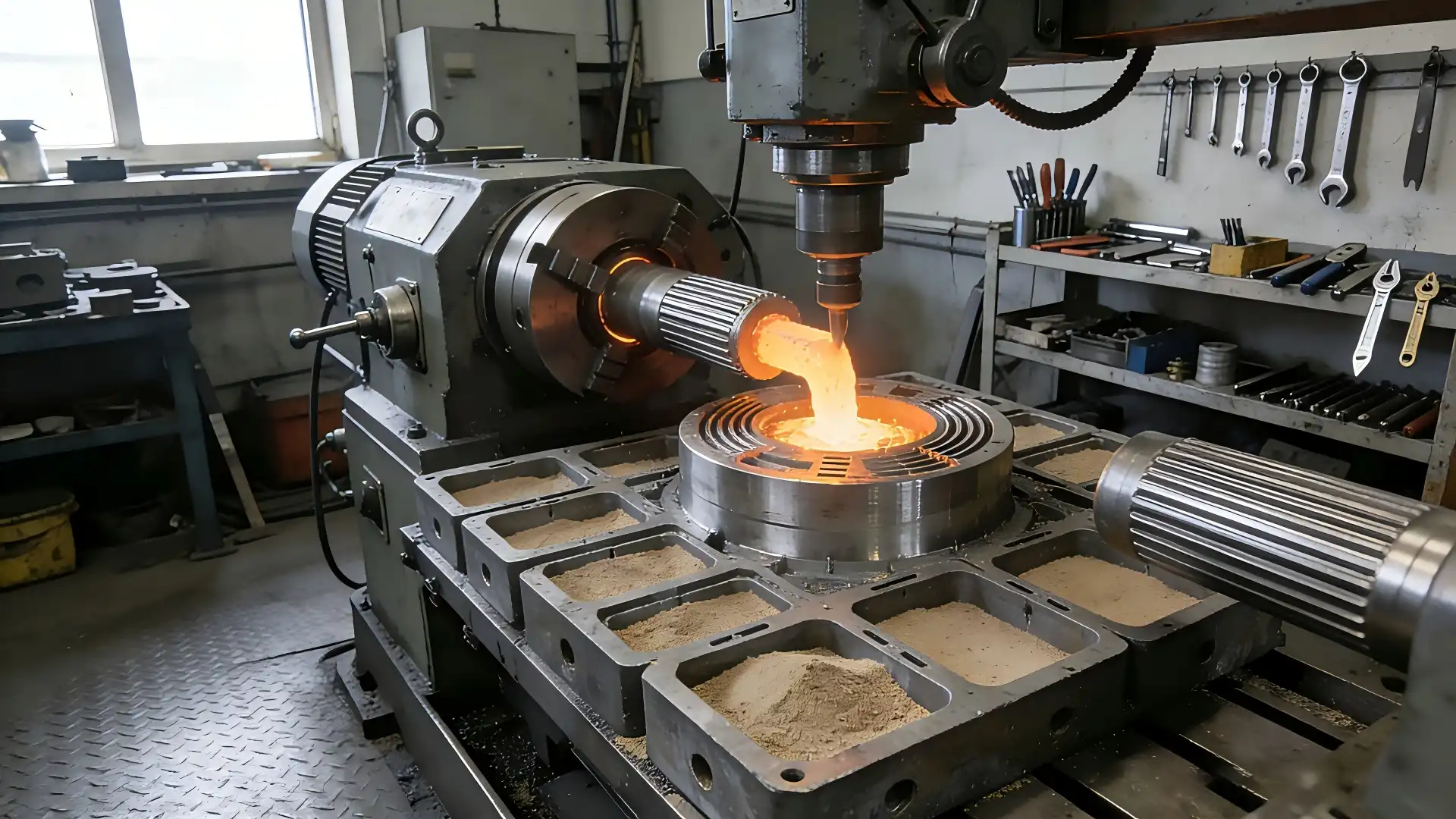
Los servicios integrados de fundición y mecanizado ofrecen una solución integral para la fabricación moderna. Al combinar la fundición y el mecanizado de precisión en un único proceso, estos servicios acortan eficazmente los ciclos de producción, mejoran la estabilidad y consistencia dimensional del producto y agilizan la coordinación de la cadena de suministro. Se han convertido en una opción clave para los fabricantes de equipos originales que buscan eficacia, calidad y control de costes en proyectos complejos.
Racionalización de la cadena de suministro para una producción más rápida, menores costes y una calidad sin concesiones
Equipo de ingeniería de Hanhai
Publicado el 4 de marzo de 2026 - 7 min read
Contenido
1. ¿Qué son exactamente los servicios integrados de fundición y mecanizado?
En esencia, los servicios integrados de fundición y mecanizado hacen referencia a una solución de fabricación racionalizada en la que un único proveedor gestiona todo el ciclo de vida de producción de un componente metálico. En lugar de comprar una pieza en bruto de metal sin mecanizar a una fundición y enviarla después a un taller de mecanizado independiente para su acabado, todo el proceso -desde la fundición y el vertido del metal hasta el mecanizado CNC de alta precisión y el tratamiento final de la superficie- se gestiona bajo un mismo techo o un sistema de gestión unificado.
Para el comprador OEM, la entrega cambia radicalmente. Ya no recibe una pieza de fundición en bruto que requiere un procesamiento posterior; recibe un componente totalmente acabado, con tolerancias estrictas y listo para montar directamente en su línea de producción.
2. Los costes ocultos de una cadena de producción fragmentada
Para entender por qué es esencial un planteamiento integrado, debemos fijarnos primero en las trampas financieras y operativas de una cadena de suministro fragmentada. Dividir los procesos de fundición y mecanizado entre dos proveedores distintos introduce importantes costes y riesgos ocultos.
En primer lugar, está la carga inmediata de la logística. Transportar piezas de fundición pesadas y en bruto desde una fundición a un taller de mecanizado añade costes de transporte innecesarios, tasas de embalaje y tiempo de tránsito a su programa de producción.
Sin embargo, el coste oculto más grave es el temido "juego de las culpas". Las piezas de fundición presentan variaciones naturales, y los defectos como la porosidad interna o los puntos duros no suelen descubrirse hasta que comienza el proceso de mecanizado. Cuando un taller de mecanizado independiente encuentra estos problemas, inevitablemente culpará a la fundición por proporcionar piezas brutas de mala calidad. A la inversa, la fundición culpará al taller de mecanizado por utilizar avances, velocidades o herramientas incorrectos. Mientras tanto, el comprador del OEM queda atrapado en medio, lidiando con retrasos en los plazos, piezas desechadas y disputas de calidad sin resolver.
3. Principales ventajas de los servicios integrados de fundición y mecanizado para fabricantes de equipos originales
Al elegir los servicios integrados de fundición y mecanizado, los compradores de OEM eliminan las fricciones de una cadena de suministro fragmentada. Este enfoque unificado ofrece cuatro ventajas esenciales:
3.1 Producción racionalizada y plazos de comercialización más cortos
Cuando la fundición y el taller de mecanizado son la misma entidad, se produce ingeniería concurrente. Los ingenieros de fundición pueden diseñar el molde y las compuertas de colada teniendo en cuenta las fijaciones finales de mecanizado. Saben exactamente dónde dejar material extra y dónde colocar los puntos de referencia. Esta transición sin fisuras reduce drásticamente los tiempos de preparación y elimina los retrasos entre las fases de fabricación, garantizando que sus productos lleguen al mercado mucho más rápido.
3.2 Control de calidad y coherencia de principio a fin
La garantía de calidad es muy superior cuando un único proveedor es responsable de la pieza final. En una instalación integrada, existe un sistema de retroalimentación de bucle cerrado. Si un operario de CNC descubre un pequeño defecto durante el fresado, puede pasar inmediatamente a la división de fundición para ajustar la temperatura de colada o el diseño de la inyección para el siguiente lote. Esta corrección en tiempo real garantiza una estricta coherencia dimensional y reduce drásticamente la tasa global de desechos.
3.3 Importante reducción de costes en logística y gestión
La consolidación de su cadena de suministro elimina al instante el doble margen de beneficio asociado a la gestión de dos proveedores. Se ahorra los costes de transporte de las piezas en bruto y elimina la necesidad de mantener un inventario intermedio. Además, su equipo de compras ahorrará incontables horas emitiendo una sola orden de compra, realizando el seguimiento de un solo envío y gestionando una sola factura. Esta reducción de los gastos administrativos es una gran ventaja para los departamentos de compras.
3.4 Comunicación simplificada con un único punto de contacto
La fabricación es compleja y las revisiones de diseño son inevitables. Cuando utiliza un proveedor integrado, sólo tiene que comunicar los cambios de ingeniería, los ajustes de volumen o los plazos de entrega a un único gestor de proyectos. Esta comunicación centralizada evita los silos de información, reduce el riesgo de malas interpretaciones y garantiza respuestas ágiles a sus necesidades cambiantes.
4. Cómo elegir el socio adecuado para la fundición y el mecanizado integrados
Reconocer que estos servicios son esenciales es el primer paso; seleccionar al socio adecuado es el siguiente. No todas las empresas que dicen ofrecer soluciones integradas tienen la experiencia necesaria. Al evaluar a los posibles proveedores, los compradores de OEM deben buscar:
- Soporte de ingeniería robusto: El socio debe ofrecer un servicio completo de diseño para la fabricación (DFM), que garantice la optimización de la pieza tanto para la colada como para el fresado CNC.
- Equipamiento avanzado: Compruebe que no sólo disponen de una capacidad de fundición fiable, sino también de centros de mecanizado CNC multieje y máquinas de medición por coordenadas (MMC) de última generación para la inspección final.
- Certificaciones de calidad: Garantizar que las instalaciones funcionan conforme a normas de calidad internacionales reconocidas, como ISO 9001 o IATF 16949 para aplicaciones de automoción.
5. Conclusión: Cómo elevar su estrategia de aprovisionamiento de OEM
En una era en la que la eficiencia y la fiabilidad dictan el liderazgo del mercado, aferrarse a una base de proveedores fragmentada es un riesgo que los fabricantes de equipos originales ya no pueden permitirse. Adoptar los servicios integrados de fundición y mecanizado no es sólo un cambio táctico para ahorrar unos dólares en fletes; es una decisión estratégica para garantizar la responsabilidad de principio a fin, una calidad superior del producto y una cadena de suministro muy ágil. Al asociarse con un verdadero fabricante integrado, los compradores de OEM se aseguran una ventaja competitiva fundamental en un mercado mundial exigente.


 English
 Русский
 العربية
 Español
 Français
 简体中文
简体中文