


In today’s volatile manufacturing landscape, relying on a single supplier for critical metal components is a vulnerability no business can afford. Supply chain disruptions, shipping delays, and unexpected production halts have made risk mitigation a top priority for procurement leaders. To build true resilience, developing a comprehensive global sourcing strategy is no longer just an option—it is a necessity. In this post, we will explore how implementing dual-source agreements in metal casting can safeguard your supply chain, optimize costs, and keep your assembly lines moving without interruption.
A Practical Guide to Building Resilience in Custom Metal Manufacturing
فريق هانهاي الهندسي
Mar 15, 2026 · 6 min read
المحتويات
1. The Hidden Risks of Single-Sourcing in Metal Casting
For decades, many original equipment manufacturers (OEMs) relied on a single foundry for their custom metal components to maximize volume discounts and simplify communication. However, the modern manufacturing landscape has exposed the fatal flaws in this approach.
- Geopolitical Shifts and Supply Chain Disruptions: Unexpected tariffs, trade restrictions, or regional instability can turn a reliable, low-cost supplier into a severe liability overnight.
- The High Cost of Unplanned Production Halts: In metal casting, lead times are notoriously long. If your sole supplier experiences equipment failure, a natural disaster, or a material shortage, your entire assembly line stops. The financial loss of a stalled production line far outweighs the marginal savings of single-sourcing.
Relying on one supplier is no longer a strategy; it is a gamble.
2. Rethinking Your Global Sourcing Strategy: The Dual-Source Approach
To build true resilience, procurement leaders must evolve their global sourcing strategy from simple cost-chasing to active risk management. This is where the dual-source agreement comes into play.
2.1 What is a Dual-Source Agreement?
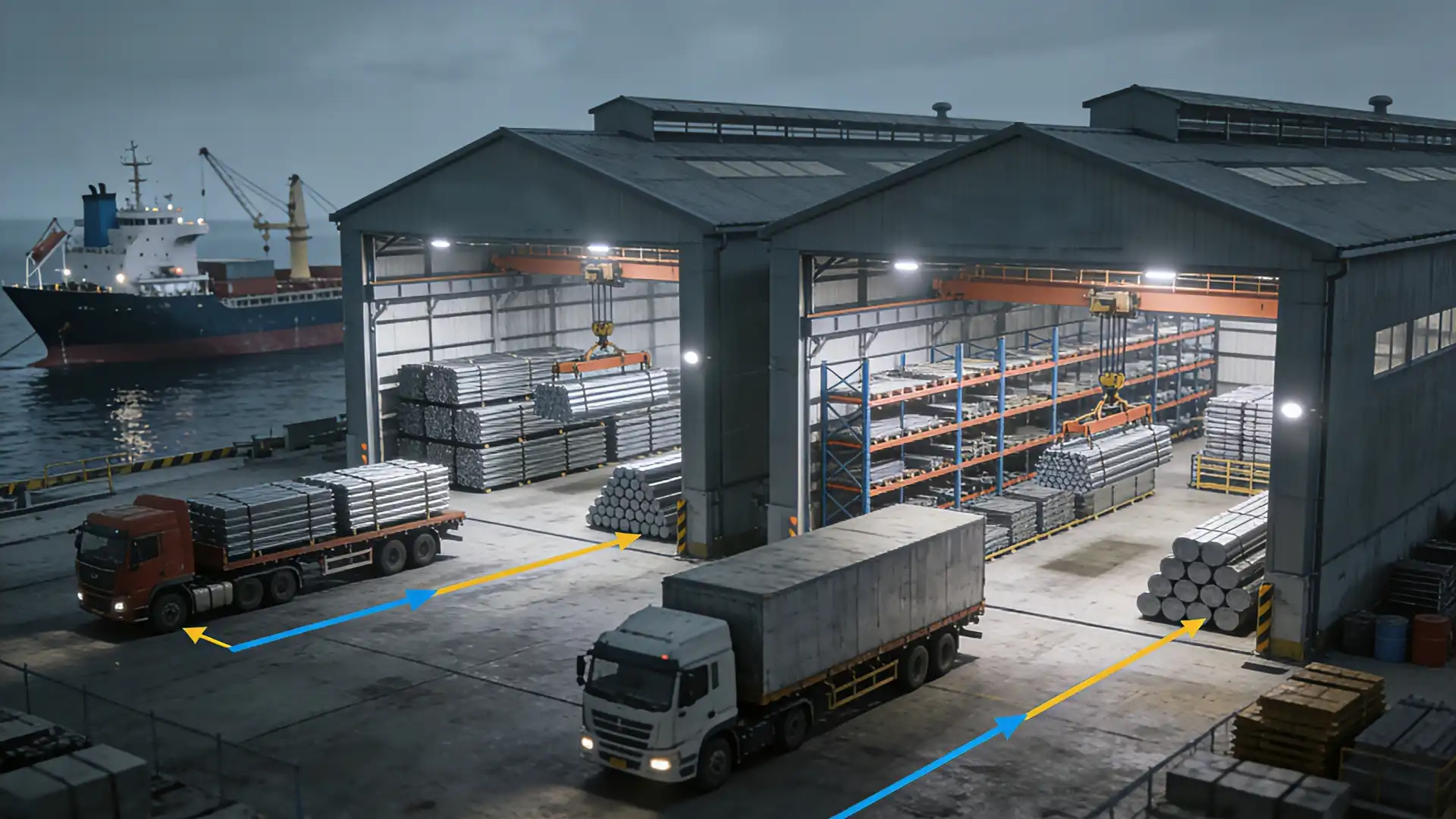
Instead of awarding 100% of a casting contract to one foundry, a dual-source agreement divides the production volume between two separate, geographically distinct suppliers.
2.2 The 80/20 Rule: Balancing Primary and Secondary Suppliers
A common and effective execution of this global sourcing strategy is the 80/20 or 70/30 split. The primary supplier handles the bulk of the volume (80%), allowing you to still benefit from economies of scale. The secondary supplier handles the remaining 20%. This keeps the secondary supplier's production lines active, their tooling warm, and their team familiar with your quality standards. If the primary supplier faces a crisis, the secondary supplier can rapidly scale up production to cover the gap.
3. How Dual-Sourcing Achieves True Risk Mitigation
Implementing a dual-source approach offers immediate, tangible benefits for your metal casting procurement:
- Guaranteed Production Continuity: If Supplier A is hit by shipping container shortages or factory lockdowns, Supplier B is already onboarded and ready to increase output. You avoid the 10-to-16-week delay of finding, vetting, and tooling a brand-new supplier during a crisis.
- Competitive Pricing and Better Cost Negotiation: Competition breeds efficiency. When two foundries share a project, they are naturally incentivized to maintain competitive pricing, optimize their processes, and deliver on time to win a larger share of your business in the next quarter.
- Consistent Quality Assurance Across Borders: Having two suppliers allows you to benchmark quality. If one foundry starts showing a higher defect rate in their castings, you have a direct point of comparison to identify the issue quickly.
4. Overcoming the Challenges: Tooling and Standardization
We understand the hesitation procurement managers face when applying dual-sourcing to metal casting. The biggest hurdle? Tooling costs.
Unlike CNC machining, casting requires custom molds and patterns. Paying for two sets of tooling seems counterintuitive to cost-saving. However, forward-thinking leaders view the second set of tooling not as an expense, but as an insurance policy. The cost of a duplicate mold is negligible compared to the millions lost during a supply chain blackout.
To make this work seamlessly:
- Standardize Your CAD and Specs: Ensure both suppliers are working from the exact same 3D models, material grades (e.g., ASTM standards), and machining tolerances.
- Harmonize Testing Procedures: Require both foundries to use identical non-destructive testing (NDT) methods and provide identical material test reports (MTRs) to ensure the castings perform interchangeably on your assembly line.
5. Building a Resilient Future with Han Hai Casting
A robust global sourcing strategy requires partners you can trust. Whether you are looking for a highly capable primary foundry to handle your largest volumes, or a reliable secondary partner to diversify your supply chain and mitigate risk, Han Hai Casting is equipped to meet your needs.
With strict quality control, transparent communication, and extensive experience in international standards, we help OEMs build supply chains that don't just survive disruptions—they thrive in spite of them.
Don't wait for the next supply chain crisis.
Contact the engineering and procurement experts at Han Hai Casting today to discuss how we can integrate into your dual-source strategy.